-
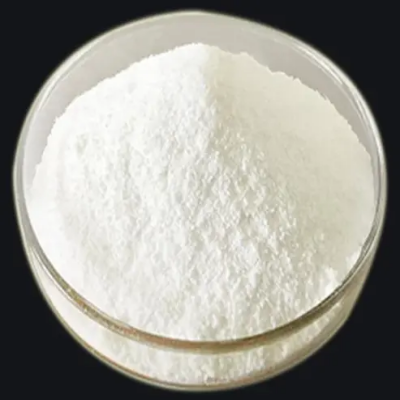
Triphenylamine CAS:603-34-9
Triphenylamine is a versatile organic compound widely utilized in the field of organic electronics and materials science due to its excellent charge-transport properties and stability. As a hole transport material, it plays a crucial role in the development of organic light-emitting diodes (OLEDs), organic photovoltaic cells (OPVs), and organic field-effect transistors (OFETs), contributing to the efficient flow of positive charges and the overall performance of these electronic devices.
-
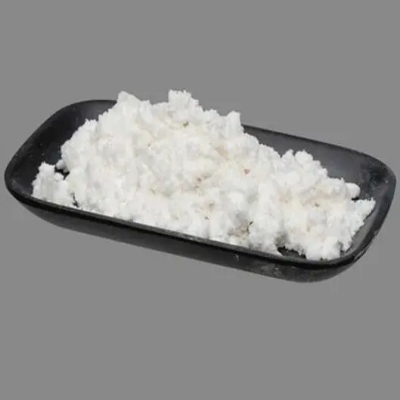
2,2′-Bipyridine-4,4′-dicarboxylic acid CAS:6813-38-3
2,2′-Bipyridine-4,4′-dicarboxylic acid is a versatile organic compound commonly employed as a ligand in coordination chemistry and metal-organic framework (MOF) synthesis. With its unique bidentate chelating properties, this molecule facilitates the formation of stable complexes with various metal ions, enabling the construction of functional materials for catalysis, sensing, and optical applications.
-
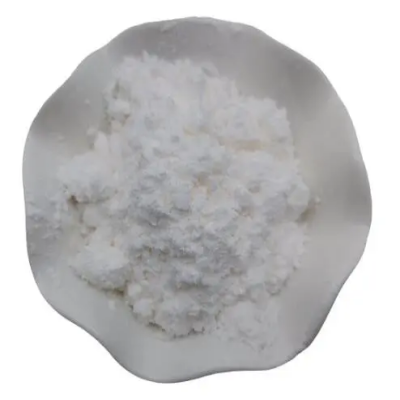
4,4′-Dimethyltriphenylamine CAS:20440-95-3
4,4′-Dimethyltriphenylamine is an organic compound commonly used as a fluorescent dye and dopant in optical materials. It exhibits excellent thermal stability and optical properties, making it suitable for various applications in optoelectronic devices.
-
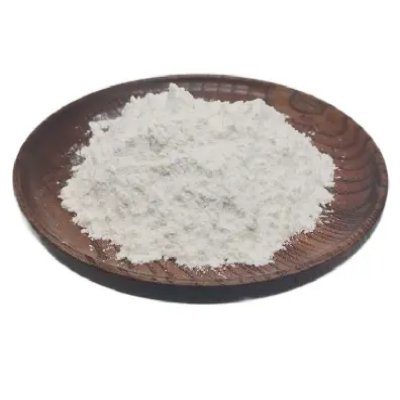
Bis(pentamethylcyclopentadienyl)strontium CAS:112379-48-3
Bis(pentamethylcyclopentadienyl)strontium is a notable organometallic compound with diverse applications in organometallic chemistry, materials science, and catalysis. This complex consists of a strontium atom coordinated to two pentamethylcyclopentadienyl ligands, offering unique reactivity and coordination properties.
-

3-(2,3-EPOXYPROPOXY)PROPYLTRIMETHOXYSILANE CAS:2530-83-8
3-(2,3-Epoxypropoxy)propyltrimethoxysilane is an organosilane coupling agent. It contains both epoxy and trimethoxysilyl functional groups, enabling it to act as a versatile adhesion promoter and surface modifier in various applications. This compound facilitates bonding between organic or inorganic materials and specific substrates, enhancing the overall performance of composite materials and coatings.
-
![2,2,4,4,6,6-hexahydro-2,2,4,4,6,6-hexakis[2,2,2-trifluoro-1-(trifluoromethyl)ethoxy]-1,3,5,2,4,6-triazatriphosphorine CAS:80192-24-1](https://cdn.globalso.com/xindaobiotech/S76J2VEENN5@2_BTD12.png)
2,2,4,4,6,6-hexahydro-2,2,4,4,6,6-hexakis[2,2,2-trifluoro-1-(trifluoromethyl)ethoxy]-1,3,5,2,4,6-triazatriphosphorine CAS:80192-24-1
2,2,4,4,6,6-hexahydro-2,2,4,4,6,6-hexakis[2,2,2-trifluoro-1-(trifluoromethyl)ethoxy]-1,3,5,2,4,6-triazatriphosphorine is a complex compound often utilized as a flame retardant and smoke suppressant in polymer materials. Its unique molecular structure, featuring phosphorus and fluorine atoms, provides exceptional fire safety properties, making it valuable for enhancing the flame resistance of plastics, textiles, and other flammable materials.
-
Lithium hexafluorophosphate CAS:21324-40-3
Lithium hexafluorophosphate, a lithium salt with the formula LiPF6, serves as a crucial electrolyte material in rechargeable lithium-ion batteries. As a non-coordinating anion, it facilitates ion conduction within the battery, contributing to its performance and efficiency. This compound is pivotal in enhancing the energy density and stability of lithium-ion battery systems, thereby supporting their widespread application in portable electronics, electric vehicles, and energy storage.
-

Pentamethylcyclopentadienyltris (acetonitrile)ruthenium(II) hexafluorophosphate CAS:99604-67-8
Pentamethylcyclopentadienyltris(acetonitrile)ruthenium(II) hexafluorophosphate is a notable organometallic complex with diverse applications in catalysis, coordination chemistry, and materials science. This compound features a ruthenium(II) center coordinated to three acetonitrile ligands and a pentamethylcyclopentadienyl ligand, and it is associated with the hexafluorophosphate anion. The unique electronic and structural properties of this complex make it valuable in various chemical processes and material applications.
-

1,1′,2,2′,3,3′,4,4′,5,5′-decamethyl Ferrocenium hexafluorophosphate CAS:54182-44-4
1,1′,2,2′,3,3′,4,4′,5,5′-decamethyl ferrocenium hexafluorophosphate is a notable organometallic compound with diverse applications in catalysis, redox chemistry, and materials science. This complex cationic species, commonly referred to as “decamethylferrocenium,” features a ferrocene core bearing ten methyl groups and is associated with the hexafluorophosphate anion.
-

{n-Bu4N}{Cu(toluene-3,4-dithiolato radical anion)(toluene-3,4-dithiolato)}CAS:15551-24-3
{n-Bu4N}{Cu(toluene-3,4-dithiolato radical anion)(toluene-3,4-dithiolato)} is a significant organometallic compound with diverse applications in coordination chemistry, catalysis, and materials science. This complex features a copper center coordinated to a toluene-3,4-dithiolato radical anion and a toluene-3,4-dithiolato ligand, associated with the tetra-n-butylammonium cation.
-

4-Tert-butylpyridine CAS:3978-81-2
4-Tert-butylpyridine is a prominent organic compound widely utilized as a strong hindered base and phase-transfer catalyst in various chemical synthesis and industrial processes. With its high basicity and steric hindrance, it serves as an essential reagent in the pharmaceutical, agrochemical, and fine chemical industries, contributing to the efficient synthesis of diverse organic compounds.
-
tert-Amylbenzene CAS:2049-95-8
tert-Amylbenzene, also known as 1,1-Dimethylpropylbenzene, is a colorless liquid hydrocarbon with a pleasant odor. It is commonly used as a solvent and chemical intermediate in various industrial applications due to its excellent solvency and reactivity.