-
Clascoterone CAS:19608-29-8 Manufacturer Supplier
Clascoterone is an androgen receptor inhibitor being developed as a topical cream and solution by Cassiopea (a spin-out company of Cosmo Pharmaceuticals) for the treatment of androgen-dependent skin disorders, including androgenetic alopecia and acne vulgaris. Although the exact mechanism of action of clascoterone for the topical treatment of acne vulgaris is unknown, the drug is believed to compete with the androgen dihydrotestosterone for binding to androgen receptors in the sebaceous gland and hair follicles to attenuate signalling necessary for acne pathogenesis.
-
Pitavastatin CAS:147511-69-1 Manufacturer Supplier
Pitavastatin is an inhibitor of HMG-CoA reductase which catalyzes the first step of cholesterol synthesis. It appears as odorless and white to pale-yellow powder. It takes effects by reducing the level of certain fatty substances such as cholesterol in the body. Therefore, it is mainly indicated for the treatment of hypercholesterolaemia and for the prevention of cardiovascular diseases. It can not only lower the high cholesterol and triglyceride in certain patients, but also can increase the content of high density lipoprotein (HDL), the “good” cholesterol levels. It should be generally administrated together with a proper diet.
-
Teduglutide CAS:197922-42-2 Manufacturer Supplier
Teduglutide (also known as ALX-0600) is a GLP-2 analogue in which glycine has been substituted for alanine at position 2 from the N-terminus, thereby conferring resistance to degradation by DPP-4. Teduglutide has similar binding affinity, agonist potency, and agonist efficacy as GLP-2 in assays with the rat GLP-2 receptor. Administration of teduglutide to rats gave a significant increase in small intestine weight and an increase in the height of intestinal villi. Teduglutide was prepared by solid-phase peptide synthesis.
-
Malic Acid CAS:6915-15-7 Manufacturer Supplier
Malic acid is a 2-hydroxydicarboxylic acid that is succinic acid in which one of the hydrogens attached to a carbon is replaced by a hydroxy group. It has a role as a food acidity regulator and a fundamental metabolite. It is a 2-hydroxydicarboxylic acid and a C4-dicarboxylic acid. It derives from a succinic acid. It is a conjugate acid of a malate(2-) and a malate.
-
Gabapentin CAS:60142-96-3 Manufacturer Supplier
Gabapentin is a major inhibitory neurotransmitter that functions by binding to the GABA receptors located in the spinal cord. Gabapentin is a γ-aminobutyric acid (GABA) analogue that acts as an anticonvulsant with proven analgesic effects in various neuropathic pain syndromes such as Complex Regional Pain Syndrome type one (CRPS 1).
-
Paracetamol CAS:103-90-2 Manufacturer Supplier
Paracetamol is a member of the class of phenols that is 4-aminophenol in which one of the hydrogens attached to the amino group has been replaced by an acetyl group. It has a role as a cyclooxygenase 2 inhibitor, a cyclooxygenase 1 inhibitor, a non-narcotic analgesic, an antipyretic, a non-steroidal anti-inflammatory drug, a cyclooxygenase 3 inhibitor, a xenobiotic, an environmental contaminant, a human blood serum metabolite, a hepatotoxic agent, a ferroptosis inducer and a geroprotector. It is a member of phenols and a member of acetamides. It is functionally related to a 4-aminophenol.
-
Aspartate Calcium CAS:10389-09-0 Manufacturer Supplier
Aspartate Calcium is one of the most abundant minerals in the body and an essential element in our life. Without it, humans could not maintain strong bones and teeth. About 99% of the calcium in the body is deposited in these two places. In addition, calcium helps the heart, nerves, muscles and other systems of the body function properly. It has stable chemical structure, good water solubility and high absorption rate. It belongs to the latest generation of calcium nutritional fortifier.
-
L-Carnitine L-Tartrate CAS:36687-82-8 Manufacturer Supplier
L-carnitine is a naturally occurring amino acid derivative which is used as a weight loss supplement. L-carnitine-L-tartrate (LCLT) is the salt of L-carnitine with tartaric acid. LCLT has potential chemoprotective and antioxidant activities.
-
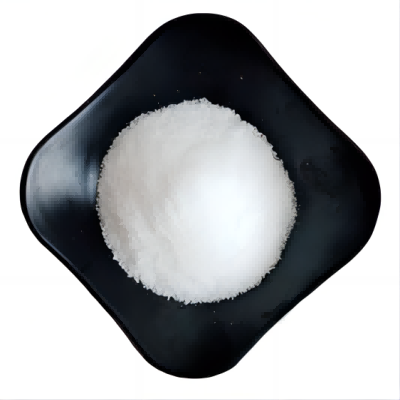
Miconazole CAS:22916-47-8 Manufacturer Supplier
Miconazole (Monistat) is a broad-spectrum imidazole antifungal agent used in the topical treatment of cutaneous dermatophyte infections and mucous membrane Candida infections, such as vaginitis. Minimal absorption occurs from skin or mucous membrane surfaces. Local irritation to skin and mucous membranes can occur with topical use; headaches, urticaria, and abdominal cramping have been reported with treatment for vaginitis.
-
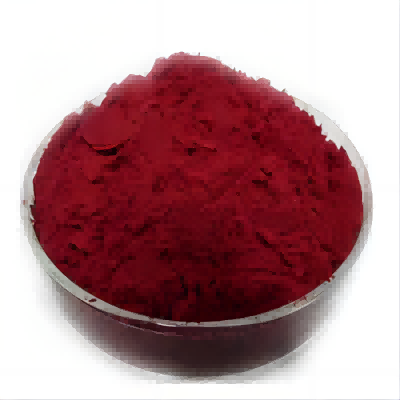
Pyrroloquinoline Quinone Disodium Salt CAS:122628-50-6
Pyrroloquinoline quinone disodium salt is a water-soluble quinone compound that has a strong antioxidant capacity. This product is a reddish-brown colored powder. It is isolated from cultures of methylotrophic bacteria and tissues of mammals. This essential nutrient is vital for mammals, playing a crucial role in enhancing immune function.
-
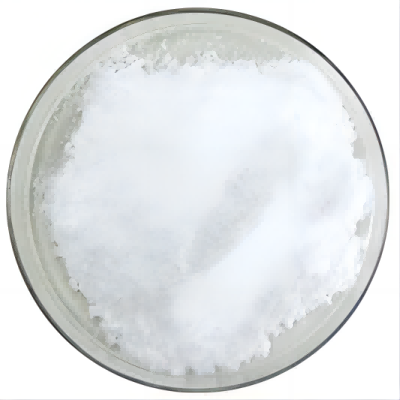
Citrulline CAS:372-75-8 Manufacturer Supplier
Citrulline is the L-enantiomer of citrulline. It has a role as an EC 1.14.13.39 (nitric oxide synthase) inhibitor, a protective agent, a nutraceutical, a micronutrient, a human metabolite, an Escherichia coli metabolite, a Saccharomyces cerevisiae metabolite and a mouse metabolite. It is an enantiomer of a D-citrulline. It is a tautomer of a L-citrulline zwitterion.
-

L-Arginine Alpha-Ketoglutarate (2:1) Dihydrate CAS:5256-76-8
L-Arginine Alpha-Ketoglutarate (2:1) Dihydrate is a pharmaceutical product that belongs to the group of drugs used to treat hyperlipidemia. The structure of this drug consists of two arginine molecules linked by an oxygen atom. It is a crystalline solid with an average particle diameter of 0.3 μm and a particle size distribution ranging from 0.05 to 1.5 μm.

