-

(5R-cis)-Toluene-4-sulfonicacid5-(2,4-difluorophenyl)-5-(1H-1,2,4-triazol-1-yl)methyltetrahydrofuran-3-ylmethylester CAS:149809-43-8
(5R-cis)-Toluene-4-sulfonicacid5-(2,4-difluorophenyl)-5-(1H-1,2,4-triazol-1-yl)methyltetrahydrofuran-3-ylmethylester is a complex chemical compound used in organic synthesis and medicinal chemistry. It comprises multiple functional groups with specific reactivities, making it valuable for diverse research applications.
-
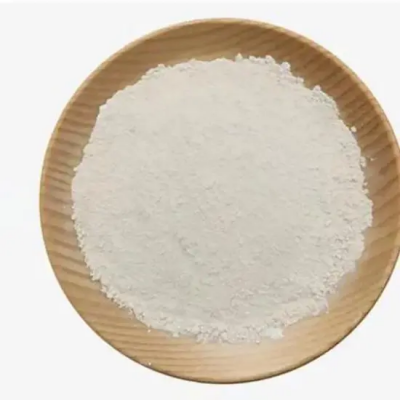
2,6-Dimethyl-5-methoxycarbonyl-4-(3-nitrophenyl)-1,4-dihydorpyridine-3-carboxylicacid CAS:74936-72-4
2,6-Dimethyl-5-methoxycarbonyl-4-(3-nitrophenyl)-1,4-dihydropyridine-3-carboxylic acid is a chemical compound belonging to the dihydropyridine class. It is structurally related to calcium channel blockers and exhibits pharmacological properties that are currently being studied for potential therapeutic applications.
-
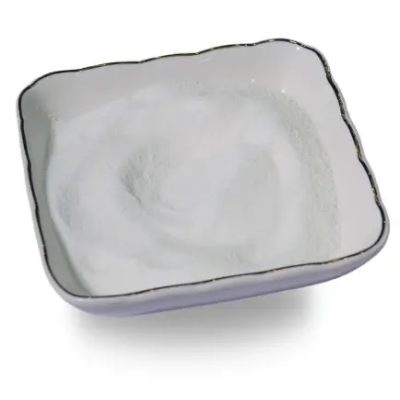
2,4,6-TRIFLUOROBENZYLAMINE CAS:214759-21-4
2,4,6-TRIFLUOROBENZYLAMINE is a chemical compound used in organic synthesis and medicinal chemistry. It belongs to the class of benzylamines and exhibits properties that make it valuable for various research applications.
-
![(3S)-3-[4-[(2-Chloro-5-iodophenyl)methyl]phenoxy]tetrahydro-furan CAS:915095-94-2](https://cdn.globalso.com/xindaobiotech/6FOL1BS0UMD0X9Z402181.png)
(3S)-3-[4-[(2-Chloro-5-iodophenyl)methyl]phenoxy]tetrahydro-furan CAS:915095-94-2
(3S)-3-[4-[(2-Chloro-5-iodophenyl)methyl]phenoxy]tetrahydrofuran is a chiral compound with the chemical formula C19H18ClIO2. It is commonly known as (3S)-3-[4-[(2-Chloro-5-iodophenyl)methyl]phenoxy]tetrahydrofuran and is a complex organic molecule with pharmacological significance.
-
![6-Chlorothiazolo[4,5-b]pyridin-2-amine CAS:1206248-17-0](https://cdn.globalso.com/xindaobiotech/10WCKQ6EGR3DADJD9G96.png)
6-Chlorothiazolo[4,5-b]pyridin-2-amine CAS:1206248-17-0
6-Chlorothiazolo[4,5-b]pyridin-2-amine is a heterocyclic compound with potential applications in medicinal chemistry and organic synthesis. This molecule features a thiazole and pyridine ring fusion with a chlorine atom at the 6-position and an amino group at the 2-position, offering unique structural properties. The compound’s aromatic nature and nitrogen-containing rings make it a valuable scaffold for designing bioactive molecules or exploring chemical reactions. Its structural complexity provides opportunities for studying diverse chemical transformations and molecular interactions.
-

tert-butyl 3-amino-4-cyano-2,5-dihydro-1H-pyrrole-1-carboxylate CAS:1227461-24-6
tert-Butyl 3-amino-4-cyano-2,5-dihydro-1H-pyrrole-1-carboxylate is a chemical compound with valuable applications in medicinal chemistry and organic synthesis. This molecule features a pyrrole ring substituted with an amino group, a cyano group, and a tert-butyl ester moiety, offering diverse reactivity and potential biological activities. The structural complexity of the compound makes it intriguing for drug discovery research, where its unique scaffold can be explored to develop novel pharmaceutical agents or probe biological targets.
-
![5-Oxaspiro[2.5]octane-1-carboxylic acid CAS:1341939-27-2](https://cdn.globalso.com/xindaobiotech/YXWU15IWKSREIEIP287.png)
5-Oxaspiro[2.5]octane-1-carboxylic acid CAS:1341939-27-2
5-Oxaspiro[2.5]octane-1-carboxylic acid is a chemical compound with potential applications in organic synthesis and pharmaceutical research. This molecule features a spirocyclic structure containing an oxaspiro ring system fused to a carboxylic acid functional group at the 1-position, offering unique structural characteristics that can influence its reactivity and potential biological activities. The compound’s cyclic nature and carboxylic acid moiety make it a versatile building block for creating novel organic molecules or investigating synthetic pathways.
-
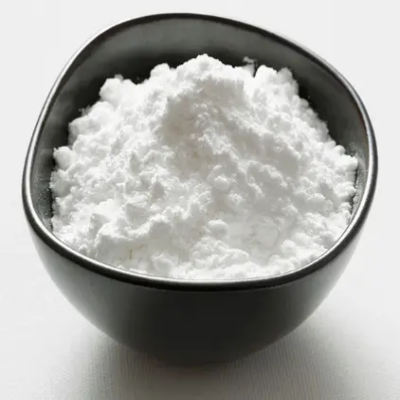
N-Methyl-N-(tetrahydrofuran-3-ylmethyl)amine hydrochloride CAS:2007919-41-5
N-Methyl-N-(tetrahydrofuran-3-ylmethyl)amine hydrochloride is a chemical compound that combines the properties of N-methyl-N-(tetrahydrofuran-3-ylmethyl)amine with the enhanced solubility provided by the hydrochloride salt form. This unique molecule features a tetrahydrofuran ring substituted with a methyl group and an amine moiety, making it valuable for pharmaceutical and research applications. The addition of the hydrochloride salt enhances its water solubility, making it more suitable for biological assays and drug formulation studies. Its structural composition allows for diverse potential interactions with biological targets, influencing its pharmacological activity and medicinal chemistry relevance.
-
N-Methyl-N-(tetrahydrofuran-3-ylmethyl)amine CAS:7179-93-3
N-Methyl-N-(tetrahydrofuran-3-ylmethyl)amine is a chemical compound with diverse potential applications in pharmaceutical research and organic synthesis. This molecule combines a tetrahydrofuran ring substituted with a methyl group and an amine functional group, offering unique structural features that can influence its reactivity and biological properties. The presence of the N-methyl group enhances its stability and solubility characteristics, making it suitable for various laboratory and medicinal chemistry applications. Researchers can leverage its versatile structure to explore new synthetic pathways or investigate its interactions with biological targets.
-
![4-Chloro-2-(trifluoromethyl)pyrazolo[1,5-a]pyrazine CAS:877402-79-4](https://cdn.globalso.com/xindaobiotech/14Z4YR3PJ6@V5_YM193.png)
4-Chloro-2-(trifluoromethyl)pyrazolo[1,5-a]pyrazine CAS:877402-79-4
4-Chloro-2-(trifluoromethyl)pyrazolo[1,5-a]pyrazine is a heterocyclic compound with potential applications in medicinal chemistry and materials science. This molecule features a fused pyrazine ring system substituted with a chlorine atom and a trifluoromethyl group, imparting unique structural and chemical properties. The compound’s aromatic nature and fluorinated substituent make it an intriguing scaffold for designing biologically active molecules or functional materials. Its structural complexity offers opportunities for exploring diverse chemical transformations and molecular interactions.
-
![2-(Trifluoromethyl)pyrazolo[1,5-a]pyrazin-4-ol CAS:877402-82-9](https://cdn.globalso.com/xindaobiotech/VYH6FUCIIBE_I7B6OOPY158.png)
2-(Trifluoromethyl)pyrazolo[1,5-a]pyrazin-4-ol CAS:877402-82-9
2-(Trifluoromethyl)pyrazolo[1,5-a]pyrazin-4-ol is a heterocyclic compound with potential applications in medicinal chemistry and organic synthesis. This molecule contains a pyrazolo[1,5-a]pyrazine core decorated with a trifluoromethyl group and a hydroxyl moiety at the 4-position, offering unique structural features that can influence its reactivity and biological properties. The compound’s aromatic nature and functional groups make it an intriguing scaffold for designing biologically active molecules or studying structure-activity relationships. Its structural complexity provides opportunities for exploring diverse chemical transformations and molecular interactions.
-

tert-butyl 3-amino-4-cyanopyrrolidine-1-carboxylate CAS:1305712-89-3
tert-Butyl 3-amino-4-cyanopyrrolidine-1-carboxylate is a chemical compound with diverse applications in organic synthesis and pharmaceutical research. This molecule contains a pyrrolidine ring substituted with an amino group at the 3-position, a cyano group at the 4-position, and a tert-butyl ester at the carboxylic acid moiety. The compound’s unique structure provides opportunities for exploring its reactivity in various chemical transformations and its potential biological activities. Its versatility makes it a valuable building block for designing novel molecules or investigating synthetic pathways.