-
2-(2-ethoxyethoxy)-Ethanol CAS:111-90-0
2-(2-ethoxyethoxy)-Ethanol is a clear, colorless liquid with a faint odor. It is commonly used as a solvent, viscosity modifier, and coupling agent in various industrial applications. Known for its excellent solvency power and compatibility, this compound plays a significant role in diverse processes.
-

2-PROPOXYETHANOL CAS:2807-30-9
2-PROPOXYETHANOL, also known as propylene glycol monopropyl ether, is a clear, colorless liquid with a mild odor. It is commonly used as a solvent, cleaning agent, and coupling agent in various industrial applications. 2-PROPOXYETHANOL is known for its ability to dissolve a wide range of substances and its compatibility with many materials.
-

2-(2-ETHYLHEXYLOXY)ETHANOL CAS:1559-35-9
2-(2-Ethylhexyloxy)ethanol, with the chemical formula C12H26O2, is a clear, colorless liquid known for its versatile applications in various industries. This compound, featuring an ethylhexyloxy group attached to an ethanol backbone, exhibits unique properties that make it suitable for diverse functions.
-
4-Nitrothiophenol CAS:1849-36-1
4-Nitrothiophenol is a yellow crystalline solid with the chemical formula C6H4NO2S. It is commonly used in organic synthesis and as a reagent in various chemical reactions due to its unique properties. This compound is notable for its aromatic ring structure combined with a nitro group and a thiol group, making it versatile for diverse applications.
-

1,2-propyleneglycol-1-monobutyl CAS:5131-66-8
1,2-Propyleneglycol-1-Monobutyl is a chemical compound utilized in various industrial applications. It is a clear, colorless liquid with the chemical formula C7H16O3. This compound, also known as butoxypropoxypropanol, exhibits specific properties that make it suitable for diverse functions.
-
1-ETHOXY-2-PROPYLACETATE CAS:54839-24-6
1-Ethoxy-2-Propylacetate is a clear, colorless liquid with the chemical formula C7H14O3. It is commonly referred to as EPEHA and belongs to the class of acetate esters. EPEHA is characterized by its mild fruity odor and is soluble in common organic solvents. It is primarily utilized as a solvent in various industrial applications, particularly in coatings, paints, and chemical reactions due to its excellent solvency properties and low volatility.
-

tert-Butyl (trans-4-(4-(trifluoromethyl)phenyl)pyrrolidin-3-yl)carbamate CAS:1212404-61-9
tert-Butyl (trans-4-(4-(trifluoromethyl)phenyl)pyrrolidin-3-yl)carbamate is a chemically significant compound used in organic synthesis and medicinal chemistry. This molecule features a tert-butyl carbamate protecting group attached to a trans-4-(4-(trifluoromethyl)phenyl)pyrrolidin-3-yl moiety, imparting unique structural characteristics suitable for various chemical processes. The presence of the trifluoromethyl group enhances the compound’s lipophilicity and electronic properties, making it valuable for structure-based drug design and synthetic applications. Chemists utilize this compound as a versatile building block for the preparation of diverse molecules with potential pharmaceutical relevance, offering opportunities for innovative molecular design and exploration in chemical sciences.
-
![tert-butyl 5-azaspiro[2.5]octan-8-ylcarbamate CAS:1232542-24-3](https://cdn.globalso.com/xindaobiotech/2QGOH2R49Y37X8W8E88O4D31.png)
tert-butyl 5-azaspiro[2.5]octan-8-ylcarbamate CAS:1232542-24-3
Tert-butyl 5-azaspiro[2.5]octan-8-ylcarbamate is a versatile compound with potential applications in the pharmaceutical and agrochemical industries. This synthetic molecule features a unique spirocyclic structure that offers distinct properties for various chemical processes. With tert-butyl and carbamate functional groups, it exhibits stability and reactivity suitable for diverse synthetic pathways. The presence of the azaspiro ring further enhances its potential as a valuable building block for designing novel compounds with desired biological activities. This compound represents a promising tool for researchers and chemists seeking to develop innovative drug candidates or agrochemical products.
-
![H-imidazo[1,5-a]pyridin-1-amine hydrochloride CAS:1519867-88-9](https://cdn.globalso.com/xindaobiotech/H@A6_8F9ZLLT0QCOA699.png)
H-imidazo[1,5-a]pyridin-1-amine hydrochloride CAS:1519867-88-9
H-imidazo[1,5-a]pyridin-1-amine hydrochloride is a chemically significant compound widely employed in pharmaceutical research and organic synthesis. This heterocyclic amine derivative possesses a fused imidazo-pyridine ring system, imparting unique structural and reactivity properties suitable for various chemical transformations. The hydrochloride salt form enhances its stability and solubility, making it a convenient reagent for medicinal chemistry applications. Chemists utilize this compound as a versatile building block for the synthesis of diverse molecular scaffolds and pharmaceutical intermediates, offering opportunities for innovative drug discovery and development.
-
Methyl 5-amino-1H-indazole-3-carboxylate CAS:660411-95-0
Methyl 5-amino-1H-indazole-3-carboxylate is a chemically significant compound widely employed in organic synthesis and pharmaceutical research. This molecule contains an amino-indazole core linked to a carboxymethyl ester group, offering unique structural and reactivity properties suitable for diverse chemical transformations. The presence of the indazole scaffold imparts distinct aromaticity and functional diversity, making it valuable for medicinal chemistry applications. Chemists utilize this compound as a versatile building block for the synthesis of heterocyclic compounds and pharmaceutical intermediates, providing opportunities for innovative molecular design and exploration in the field of chemical sciences.
-
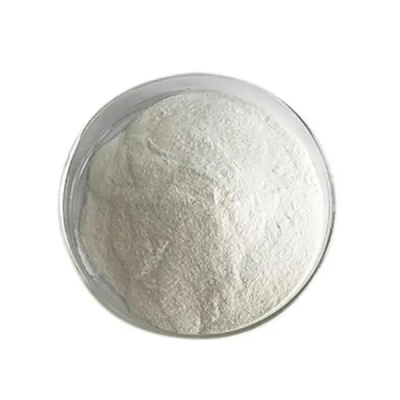
4-Hydrazino-piperidine-1-carboxylic acid benzyl ester dihydrochloride CAS:916831-70-4
4-Hydrazino-piperidine-1-carboxylic acid benzyl ester dihydrochloride is a chemical compound commonly utilized in organic synthesis and medicinal chemistry. This dihydrochloride salt derivative of the benzyl ester of hydrazinopiperidine-1-carboxylic acid is recognized for its enhanced stability and solubility properties compared to the free base form. With a well-defined structure and unique functional groups, 4-Hydrazino-piperidine-1-carboxylic acid benzyl ester dihydrochloride serves as a valuable intermediate in the synthesis of pharmaceuticals and bioactive compounds.
-
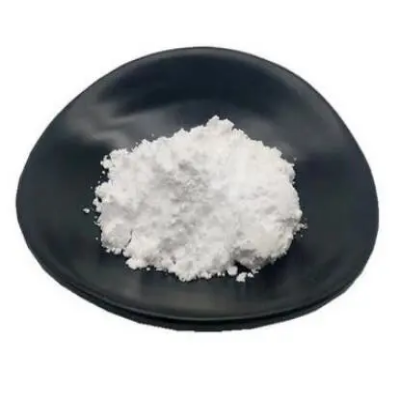
(S)-4-benzyloxymandelic acid CAS:197437-40-4
(S)-4-benzyloxymandelic acid is a valuable compound with applications in organic synthesis and the pharmaceutical industry. This chiral mandelic acid derivative features a benzyl ether moiety attached to the hydroxyl group at the 4-position, imparting unique stereochemical and reactivity properties. The S configuration of this compound defines its enantiomeric purity and influences its interactions in chemical reactions. Chemists and researchers utilize this compound as a key building block for the preparation of chiral compounds, pharmaceutical intermediates, and fine chemicals due to its synthetic versatility and chirality.