-
Profenofos CAS:41198-08-7 Manufacturer Supplier
Profenofos is an organic thiophosphate, an organophosphate insecticide, an organochlorine insecticide and a member of monochlorobenzenes. It has a role as an EC 3.1.1.7 (acetylcholinesterase) inhibitor, an acaricide and an agrochemical. It is functionally related to a 4-bromo-2-chlorophenol.
-
ETOXAZOLE CAS:153233-91-1 Manufacturer Supplier
Etoxazole is an organofluorine acaricide. It induces toxicity in two-spotted spider mite (T. urticae) larvae (LC50 = 0.036 mg/L for the London reference strain) through inhibition of chitin synthase 1. It reduces acetylcholinesterase (AChE) activity in the freshwater fish O. niloticus in a concentration-dependent manner. Etoxazole (2.2-22 mg/kg per day) inhibits the activity of catalase, glutathione peroxidase (GPX), and AChE in the liver and kidneys of rats in a dose-dependent manner. Formulations containing etoxazole have been used for the control of mites in agriculture.
-
Lufenuron CAS:103055-07-8 Manufacturer Supplier
Lufenuron is an insect development inhibitor of the benzoylphenyl urea class. It demonstrates activity against fleas that have fed on treated cats and dogs and become exposed to lufenuron in the host’s blood. Lufenuron also has activity by virtue of its presence in adult flea feces, leading to its ingestion by flea larvae. Both activities result in the production of eggs that are unable to hatch, causing significant reductions in flea larvae populations. The lipophilicity of lufenuron leads to its deposition in adipose tissues of animals from where it is slowly released into the bloodstream.
-
ACEQUINOCYL CAS:57960-19-7 Manufacturer Supplier
Acequinocyl, also known as 2- (acetoxy) 3-dodecyl-1,4-naphthoquinone, is a pure yellow powder solid. Acequinocyl is an important synthetic acaricide pesticide used to control lice, mites, and other invertebrates.
-
Cyromazine CAS:66215-27-8 Manufacturer Supplier
Cyromazine is a triazine insect growth regulator that can be used as an insecticide and an acarcide. It is a kind of cyclopropylderivative of melamine, and also belongs to the family of aminotriazines which are compound consisting of an amino group attached to a triazine ring. It has specific activity against dipterous larvae, and has been approved by FDA for being applied to livestock. It is not a kind of cholinesterase inhibitor, and taking effect through affecting the nervous system of the immature larval stage of the insects.
-
Chlorfenapyr CAS:122453-73-0 Manufacturer Supplier
Chlorfenapyr is a broad spectrum pesticide which is not approved for use in the EU, and only approved for limited applications in the US (applications for ornamental plants in greenhouses). It was originally rejected for FDA approval due to avian and aquatic toxicity. Data on human toxicity is still scarce, but it has moderate mammalian toxicity when taken orally, causing vacuolation of the nervous system in mice and rats. It is not persistent in ecosystems, and has low aqueous solubility.Chlorfenapyr can also be used as an insect-proofing agent in wool, and has been investigated for applications in malaria control.
-

Imidacloprid CAS:138261-41-3 Manufacturer Supplier
Imidacloprid is a systemic insecticide that acts as an insect neurotoxin and belongs to a class of chemicals called the neonicotinoidswhich act on the central nervous system of insects. Imidacloprid is a systemic, chloro-nicotinyl insecticide with soil, seed and foliar uses for the control of sucking insects including rice hoppers, aphids, thrips, whiteflies, termites, turf insects, soil insects and some beetles. It is most commonly used on rice, cereal, maize, potatoes, vegetables, sugar beets, fruit, cotton, hops and turf, and is especially systemic when used as a seed or soil treatment.
-
Thiamethoxam CAS:153719-23-4 Manufacturer Supplier
Thiamethoxam is an oxadiazane that is tetrahydro-N-nitro-4H-1,3,5-oxadiazin-4-imine bearing (2-chloro-1,3-thiazol-5-yl)methyl and methyl substituents at positions 3 and 5 respectively. It has a role as an antifeedant, a carcinogenic agent, an environmental contaminant, a xenobiotic and a neonicotinoid insectide. It is an oxadiazane, a member of 1,3-thiazoles, an organochlorine compound and a 2-nitroguanidine derivative. It derives from a 2-chlorothiazole.
-
Tebufenpyrad CAS:119168-77-3 Manufacturer Supplier
Tebufenpyrad is a fast and efficient new type of pyrazolamide acaricide, jointly developed by Mitsubishi Corporation in Japan and Cyanamide Corporation in the United States. It has rapid and efficient effects on various mites and mites throughout their development, with a long duration of efficacy. It has no cross resistance, low toxicity, no internal absorption, and excellent selectivity to target crops, such as trichloro acaricide Chemicalbook alcohol, phenylbutyltin, and thiacloprid, At the recommended dosage (25-200mg AI/L), it is not harmful to most crops.
-
Fenbutatin-oxide CAS:13356-08-6 Manufacturer Supplier
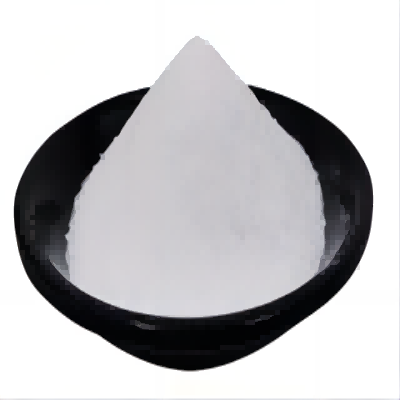
Fenbutatin oxide is quite stable to hydrolytic degradation. Metabolism in soils, plants and animals is minimal. The extensive and irreversible adsorption/binding to cationic and organic matter is the primary dissipation mechanism in the soil environment.
-
Mycorrhiza Granular – Manufacturer Supplier
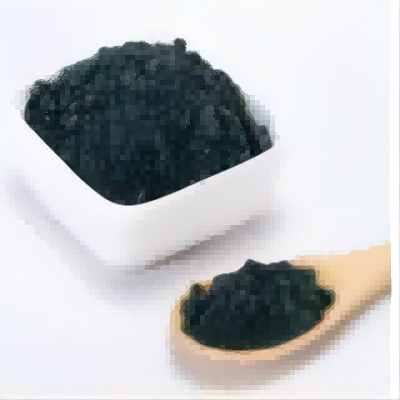
ARPHA GOLD(Arbuscular Mycorrhiza, also known as AMF) is a unique beneficial microbes from nature. It is a combination of mycorrhizal fungus hyphae in the soil and the nutrient root system of higher plants. It is used to absorb and transport nutrients to the root system.
-
Spinosad CAS:131929-60-7 Manufacturer Supplier
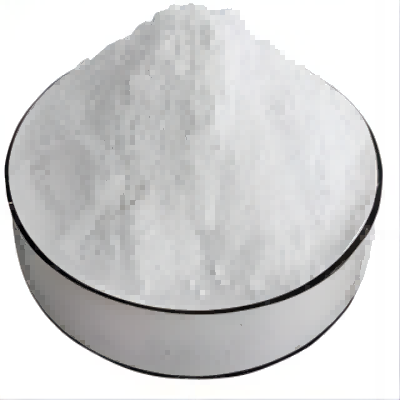
Spinosad is a group 5 nicotinic acetylcholine receptor agonist, that causes involuntary muscle contractions and tremors secondary to motor neuron activation. Prolonged exposure causes paralysis and flea death. Flea death begins within 30 minutes of dosing and in 4 hours is complete. Spinosad does not interact with bindings sites of other insecticidal agents (GABA-ergic or nicotinic).