-
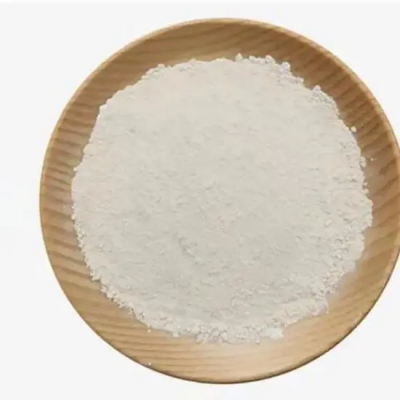
Bis-(sodium sulfopropyl)-disulfide CAS:27206-35-5
Bis-(sodium sulfopropyl)-disulfide is a chemical compound with the molecular formula C6H12Na2O6S4. It is a water-soluble, anionic surfactant and a member of the disulfide surfactant family. This compound contains two sulfonate groups and a disulfide bond, giving it unique properties that make it useful in various applications. It is typically found in the form of a white to off-white powder.
-
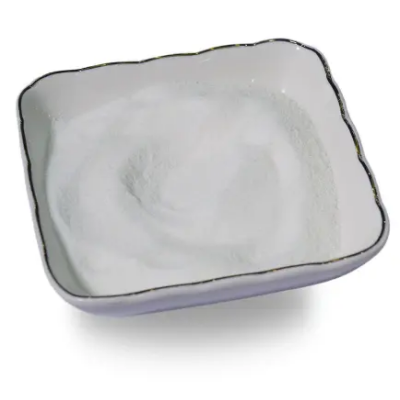
1,2-Bis(2-cyanoethoxy)ethane CAS:3386-87-6
1,2-Bis(2-cyanoethoxy)ethane, also known as bis(2-cyanoethoxy)ethane, is a chemical compound with the molecular formula C8H12N2O2. It is a diester derivative containing two cyanoethoxy groups attached to a central ethane backbone. This compound is primarily used as a crosslinking agent in the synthesis of polymeric materials, particularly in the production of polyurethanes and epoxy resins. Its bifunctional nature allows it to participate in the formation of covalent bonds between polymer chains, enhancing the mechanical strength, durability, and thermal properties of the resulting materials. Additionally, 1,2-Bis(2-cyanoethoxy)ethane is employed in the preparation of specialty polymers and composites with tailored properties for applications in adhesives, coatings, and structural materials.
-
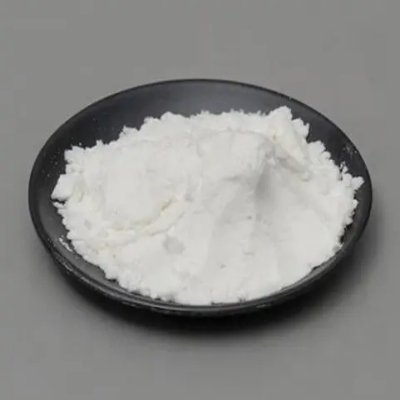
1-ethenyl-1(or 3)-methyl-1H-Imidazolium methyl sulfate (1:1) homopolymer CAS:31855-14-8
1-Ethenyl-1(or 3)-methyl-1H-imidazolium methyl sulfate (1:1) homopolymer is a polymer compound with the chemical structure (C7H11N2O4S)n. It is a type of ionic liquid polymer that exhibits unique physical and chemical properties. This polymer is typically a colorless to pale yellow solid and is known for its ionic conductivity and thermal stability. It is soluble in polar solvents and water, making it suitable for various applications.
-
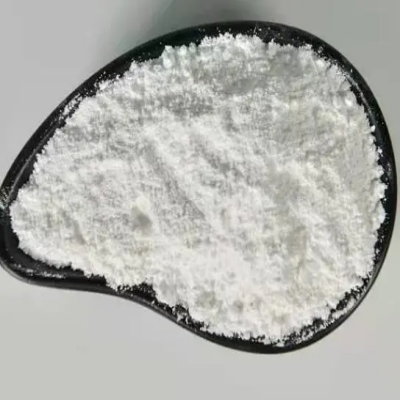
trans-Dichlorodiammine palladium (II) CAS:13782-33-7
Trans-Dichlorodiammine palladium(II), also known as trans-[PdCl2(NH3)2], is a coordination complex featuring palladium in the +2 oxidation state. This compound consists of a palladium center coordinated to two chloride ligands and two ammonia ligands in a trans configuration. It is a well-known and widely studied compound in coordination chemistry and catalysis.
-
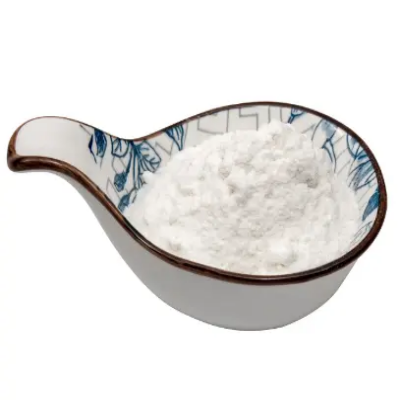
Tetrakis(triphenylphosphine)palladium(0) CAS:14221-01-3
Tetrakis(triphenylphosphine)palladium(0) is a coordination complex featuring palladium in the 0 oxidation state, coordinated with four triphenylphosphine ligands. This compound is extensively studied and utilized in various catalytic and synthetic applications due to its unique coordination geometry and reactivity. The presence of palladium in the 0 oxidation state makes this complex particularly interesting for catalytic purposes.
-
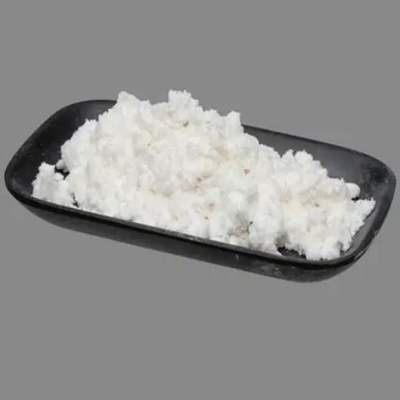
Prop-1-ene-1,3-sultone CAS:21806-61-1
Prop-1-ene-1,3-sultone is a chemical compound with a sulfonic ester structure, consisting of a four-membered ring containing a sulfur atom and a double bond. This molecule possesses unique reactivity and properties that make it valuable in various applications. It is known for its ability to undergo ring-opening reactions, enabling the introduction of sulfonic acid groups into organic molecules, which can lead to the modification of their properties and functionalities. Additionally, prop-1-ene-1,3-sultone is recognized for its potential as a reactive intermediate in organic synthesis, allowing for the incorporation of sulfonate groups into diverse chemical compounds.
-

Lithium bis(trifluoromethanesulphonyl)imide CAS:90076-65-6
Lithium bis(trifluoromethanesulphonyl)imide is a lithium salt with the chemical formula LiN(CF3SO2)2. It is a white crystalline powder and is commonly used as an electrolyte in lithium-ion batteries and as a conducting salt in organic electronics.
-
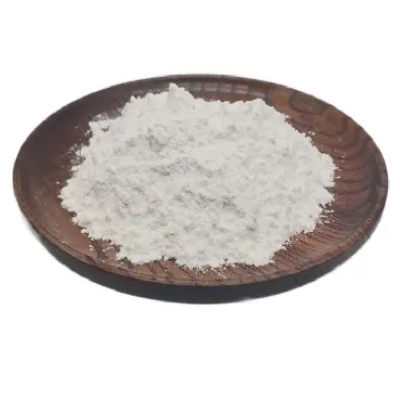
Bis(tri-t-butylphosphine)palladium(0) CAS:53199-31-8
Bis(tri-tert-butylphosphine)palladium(0), often denoted as Pd(P(t-Bu)3)2, is a coordination complex featuring palladium in the 0 oxidation state. This compound consists of a palladium center coordinated to two molecules of tri-tert-butylphosphine ligands. It is widely used as a catalyst in various organic transformations, particularly in the field of homogeneous catalysis.
-

Palladium(II) 2,2,2-trifluoroacetate CAS:42196-31-6
Palladium(II) trifluoroacetate is a coordination complex featuring palladium in the +2 oxidation state, with trifluoroacetate ligands. This compound is utilized as a catalyst in various organic transformations, particularly in the field of homogeneous catalysis. Its unique structure and reactivity make it an important model compound for understanding the behavior of palladium catalysts in organic synthesis.
-
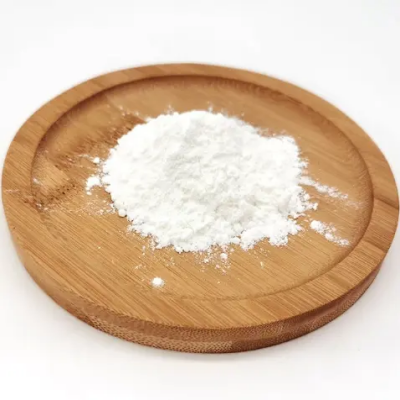
Diacetatobis(Triphenylphosphosphate) Palladium (11) CAS:14588-08-0
Diacetatobis(Triphenylphosphine) Palladium(II) is a coordination complex featuring palladium in the +2 oxidation state, coordinated with acetate and triphenylphosphine ligands. This compound is used as a catalyst in various organic transformations, particularly in the field of homogeneous catalysis. Its unique structure and reactivity make it an important model compound for understanding the behavior of palladium catalysts in organic synthesis.
-
Tris(dibenzylideneacetone)dipalladium(0) CAS:51364-51-3
Tris(dibenzylideneacetone)dipalladium(0) is a coordination complex featuring palladium in the 0 oxidation state, coordinated with three molecules of dibenzylideneacetone. This compound is extensively studied and utilized in various catalytic and synthetic applications due to its unique coordination geometry and reactivity. The presence of palladium in the 0 oxidation state makes this complex particularly interesting for catalytic purposes.
-
Dichlorobis(di-tert-butylphenylphosphine)palladium(II)CAS:34409-44-4
Dichlorobis(di-tert-butylphenylphosphine)palladium(II), also known as PdCl2(dtbpp)2, is a coordination complex featuring palladium in the +2 oxidation state. This compound consists of a palladium center coordinated to two chloride ligands and two molecules of di-tert-butylphenylphosphine (dtbpp). It is a valuable catalyst in various organic transformations, particularly in the field of organic synthesis.

