-
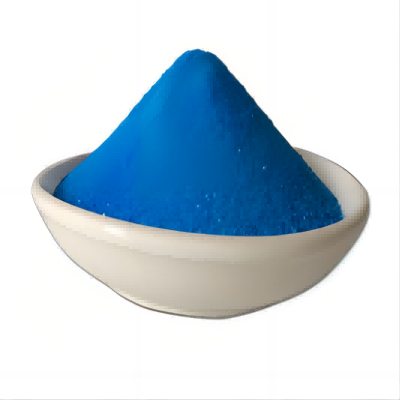
Copper Sulfate CAS:7758-98-7 Manufacturer Supplier
Cupric sulfate, a bluish crystalline powder, also known as hydrocyanite and copper sulfate, vitriol, chalcanthite, and bluestone, is an azure blue material used in the It is used in the leather industry. It is prepared by the reaction of sulfuric acid and copper. It is also obtained as a by-product from copper refineries.
-
Magnesium Carbonate CAS:13717-00-5 Manufacturer Supplier
Magnesium carbonate is found in a mixture of natural minerals. It can also be produced in several ways, including pumping carbon dioxide through magnesium oxide or magnesium hydroxide. It is used in pharmaceuticals such as magnesium citrate and as a desiccant to keep hydroscopic products from caking (table salt) and to strengthen rubber and produce dyes, inks, and cosmetics.
-
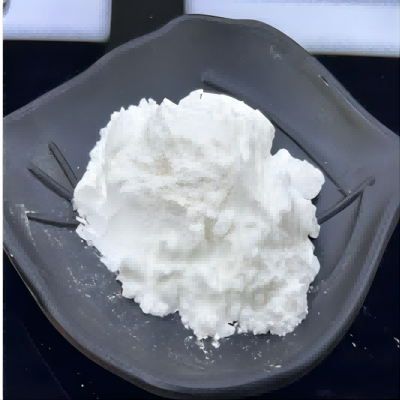
Vitamin B15 (Pangamic acid) CAS:11006-56-7 Manufacturer Supplier
Pangamic acid, also called pangamate, is the name given to the chemical compound described as d-glucono dimethyl amino acetic acid, initially promoted by Ernst T. Krebs, Sr. and his son Ernst T. Krebs, Jr. as a medicinal compound for use in treatment of a wide range of diseases. They also termed this chemical “Vitamin B15″, though it is not a true vitamin, has no nutritional value, has no known use in the treatment of any disease and has been called a “quack remedy.” Although a number of compounds labelled “pangamic acid” have been studied or sold, no chemical compound, including those claimed by the Krebses to be pangamic acid, has been scientifically verified to have the characteristics that defined the original description of the compound.
-

Vitamin K4 (Acetomenaphthone) CAS:573-20-6 Manufacturer Supplier
Menadiol Diacetate(Vitamin K4) is essential for efficient blood-clotting and to maintain proper bone calcification. Practically Menadiol Diacetate(Vitamin K4) assists in the treatment of hemorrhagic-type disease, namely coccidiosis.
-
Vitamin B4 (Adenine phosphate) CAS:73-24-5 Manufacturer Supplier
Adenine is one of the purine nitrogenous bases that composes DNA and RNA; composed of two carbon–nitrogen rings. Adenine bonds with thymine in DNA and with uracil in RNA (see base pairing rule); it is also a major component of other molecules such as adenosine triphosphate.
-
Vitamin C Palmitat CAS:137-66-6 Manufacturer Supplier
Ascorbyl palmitate is a lipophilic derivative of ascorbic acid with antioxidant and antiproliferative activities. It scavenges hydroxyl radicals in cell-free assays. Ascorbyl palmitate (0.01%) reduces the rate of autoxidation of soybean, safflower, sunflower, peanut, and corn oil. It inhibits increases in epidermal ornithine decarboxylase activity and DNA synthesis induced by phorbol 12-myristate 13-acetate (TPA; ) in mice in a concentration-dependent manner when applied topically.
-
Zinc Picolinate CAS:17949-65-4 Manufacturer Supplier
Zinc picolinate is an organic zinc supplement wherein zinc atom is attached to a picolinic acid molecule. Studies have also suggested that zinc supplements may reduce the incidence of respiratory infections in children. A number of zinc supplements are available, including zinc acetate, zinc gluconate, zinc picolinate, and zinc sulfate. Zinc picolinate is a highly available form of zinc supplement, easily dissolved to release the elemental zinc for use in the body. Surprisingly, although Zinc picolinate is widely used as a supplement with greater bioavailability claims, there are very few scientific studies to back this claim.
-
Vitamin U (Methylmethionine Sulfonium Chloride) CAS:63889-27-0
Vitamin U, also known as Methylmethionine Sulfonium Chloride (Methylmethionine Sulfonium Chloride), is an anti-ulcer agent, mainly used to treat gastric ulcer and duodenal ulcer. It is not an essential nutrient for the human body.Vitamin U (DL-methionine methylsulfonium chloride) is a natural methionine-derivative, found as an active component in the methionine cycle of plants where it serves as a substrate for methyl transferases (Augspurger et al., 2005). Historically this compound has been utilized as either a cure or preventative against gastric and duodenal ulcers (Nakamura et al., 1981). Vitamin U has been shown to aid in an overall increased weight gain of 3.6% and to decrease feed efficiency by 2.0% when included in a hog-fattening ration at 25 mglkg of feed (Solntsev and Filipovich, 1981).
-
Vitamin B5 (D-Calcium Pantothenate) CAS:137-08-6 Manufacturer Supplier
D-Calcium pantothenate as components of coenzyme A regulates the metabolism of protein, saccharide, and fat, and prevents diseases, which is indispensable substance for growth and development of domesticated creatures and fishes, for fatty synthesis and decomposition. The lack of D-calcium pantothenate would result in the slow growth of poultry and the malfunction of reproduction mechanisms. Therefore, D-calcium pantothenate as a growth factor is used in feed additives. In addition, D-calcium pantothenate is also as food enrichment widely used in food industries, sun as breakfast cereals, beverages, dietetic, and baby foods.
-
Vitamin D2 (Ergocalciferol) CAS:50-14-6 Manufacturer Supplier
Ergocalciferol, also under the name vitamin D2, is a type of vitamin D found in plants and yeast. It has no antirachitic activity. It helps the body to absorb calcium and phosphorus. It is used as a dietary supplement. It is used in the treatment of hypoparathyroidism (a condition in which not enough parathyroid hormone can be produced by the body), refractory rickets (softening and weakening of bones that does not respond to treatment, it is also known as vitamin D resistant rickets), and familial hypophosphatemia (rickets or osteomalacia caused by an inherited condition with a decreased ability to break down vitamin D in the body). Ergocalciferol is also used as a rodenticide.
-
Bis(maltolato) Oxo Vanadium CAS:38213-69-3 Manufacturer Supplier
Bis(maltolato)oxovanadium (BMOV) has proven itself as a successful antidiabetic agent when tested in animalmodels. Nevertheless, only very little is known about its mode of action. It is believed that BMOV acts as a competitive and reversible inhibitor of the enzyme protein tyrosine phosphatase (PTP).
-

Calcium Malate CAS:17482-42-7 Manufacturer Supplier
Calcium malate can not only be used in food supplements and nutritional supplements. Calcium plays an important role in the formation of strong bones and teeth and the regeneration of bone tissue after fracture, helping to maintain regular heart rhythm and nerve pulsation.