-
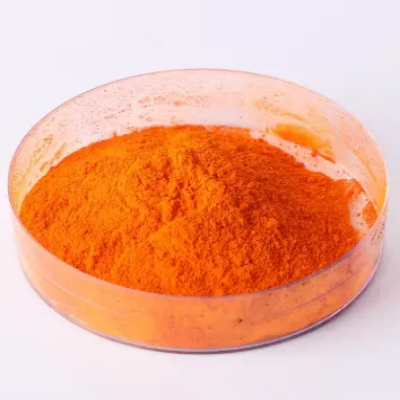
Beta-Carotene CAS:7235-40-7
Beta-carotene is a red-orange pigment found in plants and fruits, especially in colorful vegetables like carrots and sweet potatoes. It is a precursor to vitamin and is a powerful antioxidant, helping to protect cells from damage caused by free radicals.
-
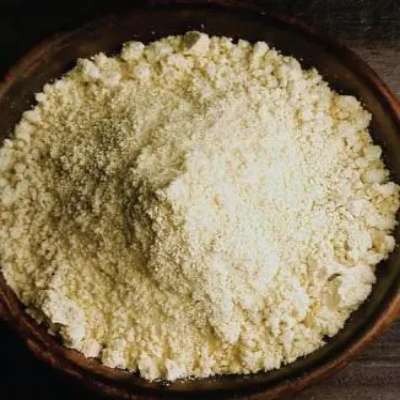
Alpha Lipoic Acid (ALA)CAS:1077-28-7
Alpha Lipoic Acid (ALA) is a powerful antioxidant that is naturally produced by the body and can also be found in certain foods. It plays a crucial role in energy production and helps to neutralize harmful free radicals. ALA has been studied for its potential benefits in supporting overall health and wellness.
-
Acesulfame K /Acesulfame Potassium CAS:55589-62-3
Acesulfame K, also known as Acesulfame Potassium, is a calorie-free sweetener that is approximately 200 times sweeter than sucrose (table sugar). It is often used in combination with other sweeteners to enhance sweetness in food and beverages. Acesulfame K is stable under heat, making it suitable for use in baked goods and products that require cooking or baking. It is commonly found in sugar-free and “diet” products, including soft drinks, chewing gum, dairy products, and desserts.
-
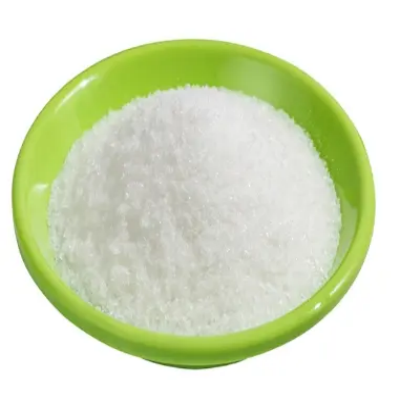
5-Hydroxytryptophan CAS:56-69-9
5-Hydroxytryptophan (5-HTP) is a naturally occurring amino acid and chemical precursor in the biosynthesis of neurotransmitters serotonin and melatonin.
-

Tetracarbonyldi-micron-chlorodirhodium(I) CAS:14523-22-9
Tetracarbonyldi-micron-chlorodirhodium(I) is a chemical compound consisting of two rhodium atoms bonded to four carbonyl groups and two chloride ions. It is commonly referred to as Rh2Cl2(CO)4. This compound is widely used as a catalyst in various organic reactions due to its unique structural and electronic properties.
-
![Ruthenium,tetracarbonyl-m-hydro[(1,2,3,4,5-h)-1-hydroxylato-2,3,4,5-tetraphenyl-2,4-cyclopentadien-1-yl][(1,2,3,4,5-h)-1-hydroxy-2,3,4,5-tetraphenyl-2,4-cyclopentadien-1-yl]di- CAS:104439-77-2](https://cdn.globalso.com/xindaobiotech/20KKQ1ROFEVXI9DUBYB2.png)
Ruthenium,tetracarbonyl-m-hydro[(1,2,3,4,5-h)-1-hydroxylato-2,3,4,5-tetraphenyl-2,4-cyclopentadien-1-yl][(1,2,3,4,5-h)-1-hydroxy-2,3,4,5-tetraphenyl-2,4-cyclopentadien-1-yl]di- CAS:104439-77-2
Ruthenium,tetracarbonyl-m-hydro[(1,2,3,4,5-h)-1-hydroxylato-2,3,4,5-tetraphenyl-2,4-cyclopentadien-1-yl][(1,2,3,4,5-h)-1-hydroxy-2,3,4,5-tetraphenyl-2,4-cyclopentadien-1-yl]di- is a chemical compound that belongs to the family of transition metal complexes. It consists of a ruthenium atom bonded to two molecules of [(1,2,3,4,5-h)-1-hydroxylato-2,3,4,5-tetraphenyl-2,4-cyclopentadien-1-yl]. The compound is commonly used in various chemical reactions and has several applications in industries.
-

Tris(triphenylphosphine)rhodium(I) chloride CAS:14694-95-2
Tris(triphenylphosphine)rhodium(I) chloride, is employed as a catalyst in various organic synthesis reactions, particularly in the context of homogeneous catalysis. It is known for its ability to facilitate a range of important transformations, including hydrogenation, hydroformylation, and various carbon-carbon and carbon-heteroatom bond-forming reactions. This complex is utilized in the preparation of fine chemicals, pharmaceutical intermediates, and complex organic molecules, playing a crucial role in the efficient and selective synthesis of valuable compounds.
-
tris(acetonitrile)cyclopentadienylruthenium(ii) hexafluorophosphate CAS:80049-61-2
Tris(acetonitrile)cyclopentadienylruthenium(II) hexafluorophosphate is commonly used as a catalyst in organic synthesis, particularly in the activation of small molecules and the promotion of various chemical transformations. Its ability to facilitate these reactions under mild conditions with high efficiency and selectivity makes it valuable in the production of pharmaceutical intermediates and fine chemicals.
-

Tris(2,2′-bipyridine)ruthenium dichloride CAS:14323-06-9
Tris(2,2′-bipyridine)ruthenium dichloride, also known as Ru(bpy)3Cl2, is a coordination complex of ruthenium with two chloride ions and three 2,2′-bipyridine ligands. It has a deep red color and is used in various applications due to its unique properties.Ru(bpy)3Cl2 is commonly used as a photosensitizer in dye-sensitized solar cells (DSSCs), which are a type of third-generation solar cells. It absorbs light and transfers electrons to the semiconductor, generating electricity. It is also used as a luminescent probe in biochemical assays for detecting DNA and proteins.
-
Hexacarbonyldi(chloro)dichlorodiruthenium(II) CAS:22941-53-3
Hexacarbonyldi(chloro)dichlorodiruthenium(II) is a coordination compound containing ruthenium as the central metal atom. It is commonly used as a catalyst in various chemical reactions due to its unique properties and reactivity.
-
Rhodium nitrate CAS:13465-43-5
Rhodium nitrate is a chemical compound with the formula Rh(NO3)3. It is a water-soluble salt that contains the transition metal rhodium in the +3 oxidation state. Rhodium nitrate is commonly encountered in the form of a reddish-brown crystalline solid and is known for its applications in various chemical and industrial processes.
-
Ruthenium dioxide hydrate CAS:32740-79-7
Ruthenium dioxide hydrate, also known as ruthenium(IV) oxide hydrate, is a chemical compound with the formula RuO2·xH2O. It is a dark brown to black solid that is of interest due to its unique properties and potential applications.

