-

Tert-Butylamine CAS 75-64-9 – Reliable Quality for Advanced Applications
Tert-Butylamine (CAS 75-64-9) stands out for its high purity, consistent performance, and excellent chemical stability. This versatile aliphatic amine is prized for its remarkable solubility and compatibility in a wide range of industries. Key advantages include its effectiveness as a building block in organic synthesis, intermediate in pharmaceuticals, and accelerator in rubber processing. Tert-Butylamine also finds value in agrochemicals and as a corrosion inhibitor in lubricants. Choosing our product means working with professionals who prioritize stringent quality control and tailored customer solutions, ensuring you receive reliable, on-time supply with technical support. Interested in maximizing performance for your next project? Reach out now and let’s discuss your requirements!
-

Neocuproine CAS 484-11-7 – Precision Ligand for Advanced Research
Neocuproine (CAS 484-11-7) stands out as a high-purity, specialized chelating agent renowned for its exceptional selectivity toward copper(I) ions. Its robust chemical stability and well-defined crystalline structure make it a favored choice in both academic and industrial laboratories. Key advantages include its reliable performance in spectroscopic studies, bioinorganic research, and catalysis, as well as its compatibility with various analytical and synthetic applications. Neocuproine’s proven efficacy facilitates the development of sensitive detection methods and innovative complexes in chemical and biochemical investigations. Choosing us ensures you receive rigorously tested quality, transparent sourcing, and expert technical support tailored for your unique requirements. If you’re curious about how Neocuproine can enhance your project, don’t hesitate to reach out—your next research breakthrough could start here. Contact me today to discuss your needs or request a quote!
-
Sodium Salt salt CAS:139-41-3 Manufacturer Price
N,N-Bis(2-hydroxyethyl)glycine sodium salt is a chemical compound used as a buffering agent in various biochemical and biophysical applications. It helps maintain a stable pH level in experimental conditions, making it useful in enzyme studies, protein research, cell culture, and Western blotting techniques.
-
4-Aminophthalhydrazide AMPPD CAS:3682-14-2
4-Aminophthalhydrazide, also known as 4-APhH, is a chemical compound with the molecular formula C8H8N2O. It belongs to the class of hydrazide compounds and is derived from phthalic acid.
.
-
![N-[3-(2-Furyl)acryloyl]-Phe-Gly-Gly CAS:64967-39-1](https://cdn.globalso.com/xindaobiotech/图片478.png)
N-[3-(2-Furyl)acryloyl]-Phe-Gly-Gly CAS:64967-39-1
N-[3-(2-Furyl)acryloyl]-Phe-Gly-Gly is a chemical compound with a complex name that represents a specific peptide sequence. It consists of various amino acids connected together in a specific order: phenylalanine (Phe), glycine (Gly), and glycine (Gly).
The compound is modified with a furan ring at the acryloyl group, which gives it unique properties and functions. This modification may impart unique characteristics to the compound, such as altered stability, reactivity, or biological activity.
-
N-Acetyl-L-cysteine CAS:616-91-1
N-Acetyl-L-cysteine (NAC) is a modified form of the amino acid cysteine. It provides a source of cysteine and can be readily converted into the tripeptide glutathione, a powerful antioxidant in the body. NAC is known for its antioxidant and mucolytic properties, making it useful in various health applications.
As an antioxidant, NAC helps protect cells from damage caused by free radicals, reactive oxygen species, and toxins. It also supports glutathione synthesis, which plays a crucial role in the body’s detoxification processes and maintaining a healthy immune system.
NAC has been studied for its potential benefits in respiratory health, particularly for individuals with conditions such as chronic bronchitis, COPD, and cystic fibrosis. It is commonly used as an expectorant to help thin and loosen mucus, making it easier to clear the airways.
Furthermore, NAC has shown promise in supporting liver health by assisting in the removal of toxic substances, such as acetaminophen, a common pain reliever. It may also have protective effects against liver damage caused by alcohol consumption.
In addition to its antioxidant and respiratory support properties, NAC has been explored for its potential benefits in mental health. Some research suggests that it may have a positive impact on mood disorders, such as depression and obsessive-compulsive disorder (OCD).
-
GLYCYL-L-PROLINE CAS:704-15-4
Glycyl-L-proline, also known as glycylproline or Gym-Pro, is an amino acid derivative that consists of the amino acid glycine attached to the amino acid L-proline. It is a naturally occurring compound found in collagen, a protein responsible for the structure and strength of various tissues in the body. Glycyl-L-proline has been studied for its potential health benefits, including promoting skin health, reducing inflammation, and supporting joint and bone health. It is also used in cosmetic formulations for its moisturizing and antioxidant properties.
-
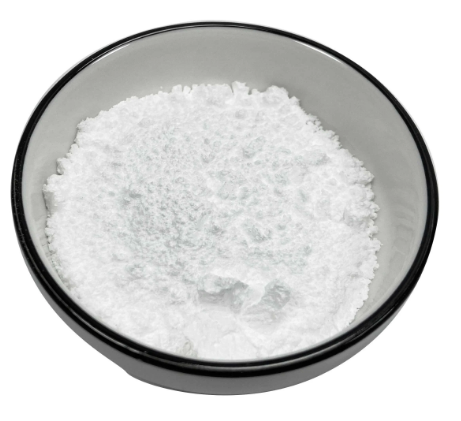
Guanidine Hydrochloride CAS:50-01-1
Guanidine hydrochloride is a chemical compound with the molecular formula CH5N3·HCl. It is a strong chaotropic agent widely used in biochemistry and molecular biology applications.
Guanidine hydrochloride is commonly used to denature proteins, disrupt protein structures, and unfold proteins for purification purposes. It is particularly effective in breaking hydrogen bonds and disrupting non-covalent interactions within proteins. This property makes it useful for solubilizing proteins that are normally insoluble or aggregate-prone.
It is also utilized as a protein stabilizer, protecting proteins from unwanted aggregation or denaturation during various biochemical and biophysical experiments. Guanidine hydrochloride can help maintain the native structure and activity of proteins under denaturing conditions.
-
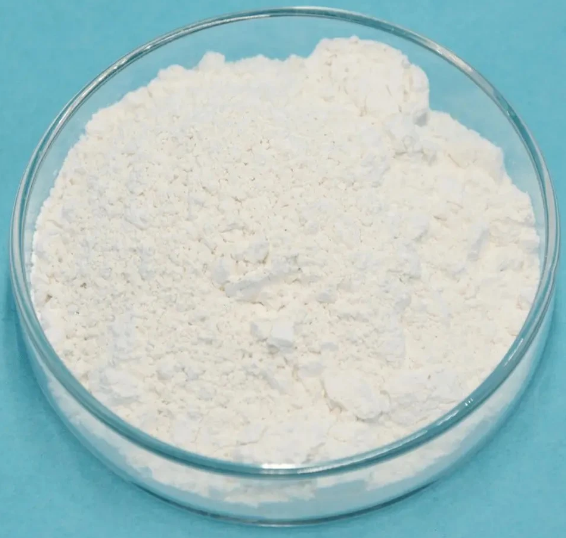
Acetylthiocholine iodide CAS:1866-15-5
Acetylthiocholine iodide is a chemical compound that is commonly used as a substrate in enzyme assays to measure the activity of the enzyme acetylcholinesterase (AChE). AChE is an enzyme that hydrolyzes the neurotransmitter acetylcholine, a critical step in terminating the signal transmission between nerve cells.
When acetylthiocholine iodide is acted upon by AChE, the acetyl group is removed, resulting in the formation of thiocholine and acetate ions. Thiocholine then reacts with a colorless reagent called DTNB (5,5′-dithiobis(2-nitrobenzoic acid)) to produce a yellow-colored compound called 5-thio-2-nitrobenzoate, which can be measured spectrophotometrically. The rate of color development is directly proportional to the activity of AChE in the sample.
-
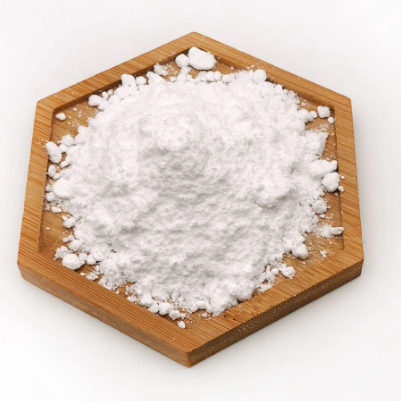
2-Methoxy-4-morpholinobenzenediazonium chloride zinc chloride double salt(21) CAS:67801-08-5
2-Methoxy-4-morpholinobenzenediazonium chloride zinc chloride double salt is a solid crystalline compound used as a reagent in organic synthesis. It consists of a diazonium cation, chloride anions, and zinc cations. This compound offers enhanced stability and solubility, making it suitable for various chemical and pharmaceutical applications.
-
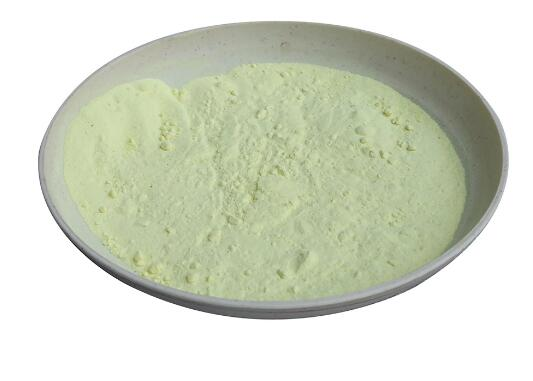
4,5-Diazafluoren-9-one CAS:50890-67-0
4,5-Diazafluoren-9-one is a chemical compound that belongs to the class of heterocyclic aromatic compounds. It consists of a fluorene skeleton with two nitrogen atoms (diaza) and an oxygen atom (one) attached at specific positions. It is commonly used as a building block or intermediate in organic synthesis, especially in the preparation of various organic compounds, pharmaceuticals, and dyes. Its structure and reactivity make it a valuable tool for creating diverse molecular structures and functional groups.
-
TAPS-NA CAS:91000-53-2 Manufacturer Price
N-[Tris(hydroxymethyl)methyl]-3-aminopropanesulfonic acid sodium salt, also known as TAPS-Na, is a chemical compound commonly used as a buffering agent in various biological and biochemical applications. It is a zwitterionic compound, meaning it has both positive and negative charges, which helps maintain a stable pH in solutions.
TAPS-Na has a pH range of approximately 7.7 to 9.1, making it suitable for applications requiring a slightly alkaline pH environment. It is often used in protein and enzyme research, as well as in molecular biology techniques such as gel electrophoresis and DNA sequencing.
As a sodium salt, TAPS-Na is highly soluble in water, which allows for easy preparation of buffered solutions. It is known for its low toxicity and minimal interference with biological molecules, making it a preferred choice for many experiments.

