-
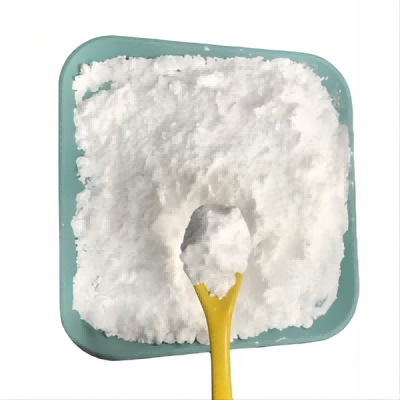
Glyceryl Monolaurate CAS:142-18-7 Manufacturer Supplier
Glyceryl Monolaurate is a 1-monoglyceride with dodecanoyl (lauroyl) as the acyl group. It is a 1-monoglyceride and a dodecanoate ester.Glycerol monolaurate is an advanced food emulsifiers preservatives nowadays, exists in breast milk naturally .Distilled Glycerol Monolaurate(GML) 90% min is an advanced food emulsifiers preservatives nowadays.
-
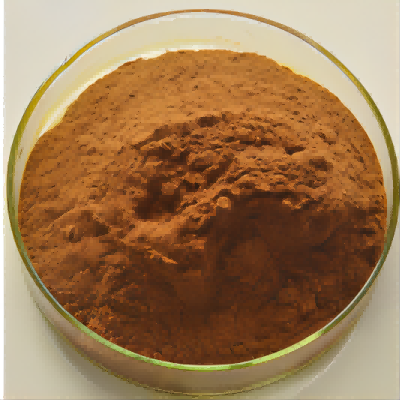
Rosemary Extract CAS:84604-14-8 Manufacturer Supplier
Rosemary leaf extract is an effective antioxidant that protects the skin and prevents signs of premature aging.Rosmarinic acid(rosmarinus officinalis extract) has a powerful calming effect on skin conditions such as eczema and acne.Rosmarinic acid(rosmarinus officinalis leaf extract) is an ingredient in rosemary extract has a calming effect on the skin and may help relieve several common skin problems.Rosmarinic acid is an antioxidant,and caffeic acid is another natural ingredient of rosemary.
-
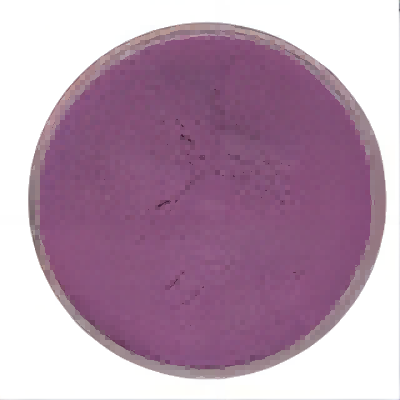
Enocyanin CAS:11029-12-2 Manufacturer Supplier
Enocyanin is an anthocyanin obtained from grapes. It can affect the activities of leucine aminopeptidase, acid phosphatase, γ-glutamyl transpeptidase and esterase.Enocyanin is used for acid drinks, wine, jam, jelly and other food coloring.
-
Carrageenan CAS:9000-07-1 Manufacturer Supplier
Carrageenans are mucopolysaccharides from the cell walls of the red algae. They are anionic linear polymers composed of 1,3α-1,4β-galactans having one (κ-), two (ι-) or three (λ-) sulfates per disaccharide unit. In ionic solutions, κ- and ι-carrageenans self-associate into helical structures that form rigid or flexible gels, respectively. λ-carrageenans do not form helices and are non-gelling. Carrageenans are used commercially as thickeners and stabilizing agents.
-
Glycine CAS:56-40-6 Manufacturer Supplier
Glycine (abbreviated as Gly or G) is an organic compound with the formula NH2CH2COOH. Having a hydrogen substituent as its side-chain, glycine is the smallest of the 20 amino acids commonly found in proteins. Its codons are GGU, GGC, GGA, GGG of the genetic code.Glycine is a colourless, sweet-tasting crystalline solid. It is unique among the proteinogenic amino acids in that it is not chiral. It can fit into hydrophilic or hydrophobic environments, due to its minimal side chain of only one hydrogen atom. Glycine is also the genus name of the Soybean plant (species name = Glycine max).
-
Sodium Ascorbate CAS:134-03-2 Manufacturer Supplier
Sodium ascorbate is sodium salt of ascorbic acid (commonly known as vitamin C), which is approved for use as a food additive in many countries. Sodium ascorbate is consisted of a combination of sodium and vitamin C, which commonly serve as an antioxidant and an acidity regulator in pharmaceutical manufacturing and in the food industry. In this mixture, sodium acts as a buffer, creating a less acidic supplement than those made entirely from vitamin C. It can be easier to tolerate if the digestive system is sensitive to acid. As a vitamin C supplement, it provides both sodium and vitamin C for human body, which is effective to prevent or treat vitamin C deficiency. Besides, studies have shown that taking sodium ascorbate is helpful with cancer prevention and treatment.
-
Ethyl Maltol CAS:4940-11-8 Manufacturer Supplier
Ethyl Maltol is a flavoring agent that is a white, crystalline powder. it has a unique odor and a sweet taste that resembles fruit. the melt- ing point is 90°c. it is sparingly soluble in water and propylene gly- col and soluble in alcohol and chloroform. it is obtained by chemical synthesis.Ethyl maltol is a synthetic homologue of maltol, often found as flavor enhancers and it contributes to the fragrance of commercials products such as cereals, breads, malt beverages, coffee, soybeans and chocolate milk.
-
Erythoric Acid CAS:89-65-6 Manufacturer Supplier
Erythorbic Acid is used as a food additive as an antimicrobial and antioxidative agent.Erythorbic acid is a stereoisomer of L-ascorbic acid, and is used as an antioxidant in foods and oral pharmaceutical formulations. It has approximately 5% of the vitamin C activity of L-ascorbic acid.
-

Guanylic Acid CAS:85-32-5 Manufacturer Supplier
Guanylic acid is often used to enhance the umami flavor of food. In the food industry, it is mainly used as a food additive in the form of sodium salt. It is used as a raw material for seasoning, soy sauce and monosodium glutamate. It is usually used together with glutamate to enhance the flavor of food.
-
Sodium Erythorbate CAS:6381-77-7 Manufacturer Supplier
Sodium Erythorbate and D-Sodium Erythorbate (also known as D-isoascorbic acid, chemical formula C6H8O6) are mainly used as food antioxidants, widely used in meat food, fish food, beer, fruit juice, fruit juice crystal, canned fruit and vegetables, pastry, dairy products, jam, wine, pickles, oil and other processing industries. Isovc sodium is widely used in meat products. As a hair color aid and meat hair color agent nitrite, isoVC sodium has an obvious color protection effect. An appropriate amount of nitrite can inhibit the growth and reproduction of botulinum toxin bacteria and play a role in preservation. Isovc sodium is indispensable in the production of ham sausage, canned meat products, sausage, soy sauce meat and other meat products.
-
Astaxanthin CAS:472-61-7 Manufacturer Supplier
Astaxanthin is a carotenone that consists of beta,beta-carotene-4,4′-dione bearing two hydroxy substituents at positions 3 and 3′ (the 3S,3′S diastereomer). A carotenoid pigment found mainly in animals (crustaceans, echinoderms) but also occurring in plants. It can occur free (as a red pigment), as an ester, or as a blue, brown or green chromoprotein. It has a role as an anticoagulant, an antioxidant, a food colouring, a plant metabolite and an animal metabolite. It is a carotenone and a carotenol. It derives from a hydride of a beta-carotene.
-
Gardenia Yellow CAS:94238-00-3 Manufacturer Supplier
Crocin-1 is a diester that is crocetin in which both of the carboxy groups have been converted to their gentiobiosyl esters. It is one of the water-soluble yellow-red pigments of saffron and is used as a spice for flavouring and colouring food. Note that in India, the term ‘Crocin’ is also used by GlaxoSmithKline as a brand-name for paracetamol. It has a role as an antioxidant, a food colouring, a plant metabolite and a histological dye. It is a diester, a disaccharide derivative and a diterpenoid. It is functionally related to a beta-D-gentiobiosyl crocetin and a gentiobiose.